
- Nebraska Studies (NET / Nebraska public media), "Edwin Perkins: Kool-Aid Inventor": born in Iowa 1889, working at his father's store in Hendley by age 11; introduced to Jell-O powder in 1900; Fruit Smack, a liquid concentrate, "corked and sold in bottles, which was very messy"; in 1927 created "Kool-Ade," later Kool-Aid, first produced in Hastings; "10 cents per package", cut to 5 cents during the Great Depression; moved to Chicago in 1931; sold to General Foods in 1953. https://nebraskastudies.org/en/1925-1949/edwin-perkins-kool-aid-inventor
- Encyclopedia of the Great Plains (University of Nebraska-Lincoln, Richard C. Witt): "In 1927 Perkins reconstituted Fruit-Smack into powdered crystals" in paper envelopes; originally called Kool-Ade; moved to Chicago 1931; sold to General Foods in 1953. https://plainshumanities.unl.edu/encyclopedia/doc/egp.ind.035.html
- Roadside America, "Kool-Aid: Discover the Dream" (Hastings Museum exhibit): Fruit Smack in glass bottles that leaked and broke, whose weight raised shipping costs; Perkins removed the water; succeeded in 1927; first manufactured in Hastings. https://www.roadsideamerica.com/story/11493
- Mental Floss, "A Brief History of Kool-Aid": "The costs of packaging and risk of breaking bottles" drove the switch to powder; Nebraska's state soft drink in 1998. https://www.mentalfloss.com/article/50278/brief-history-kool-aid
- State Symbols USA (Nebraska state soft drink, Kool-Aid, 1998): https://statesymbolsusa.org/node/2328
- Spelling-change theories (the "-ade means juice" story; no regulation document found; date given as 1934 or 1935): Mental Floss above, and Online Etymology Dictionary https://www.etymonline.com/word/Kool-Aid.
Food Stories · Episode 14 · Food brand history
Take the Water Out: How Kool-Aid Became a Powder
Edwin Perkins turned his bottled Fruit Smack syrup into a powder in 1927 Nebraska. Why he took the water out, and the unproven story behind the spelling.
 Video coming soon
The short answer
Edwin Perkins grew up in Nebraska working in his father's store, where he was fascinated by powdered Jell-O. As an adult in Hastings, he sold a drink syrup called Fruit Smack in glass bottles that were heavy, leaked and broke. In 1927 he took the water out, sold the drink as a powder in paper envelopes, and called it Kool-Ade. A packet cost 10 cents, cut to 5 cents in the Great Depression.
- The company moved to Chicago in 1931.
- The story that the government made it change "-ade" to "-aid" has never been matched to an actual rule.
- Nebraska made Kool-Aid its official state soft drink in 1998.
The story (transcript)
Narration from the episode, as it is spoken.
You tear open a little packet, pour the powder into water, stir, and it turns bright red. Magic.
So why is this drink a powder?
Meet Edwin Perkins. As a kid in Hendley, Nebraska, he worked in his dad's store and was fascinated by a new powder called Jell-O.
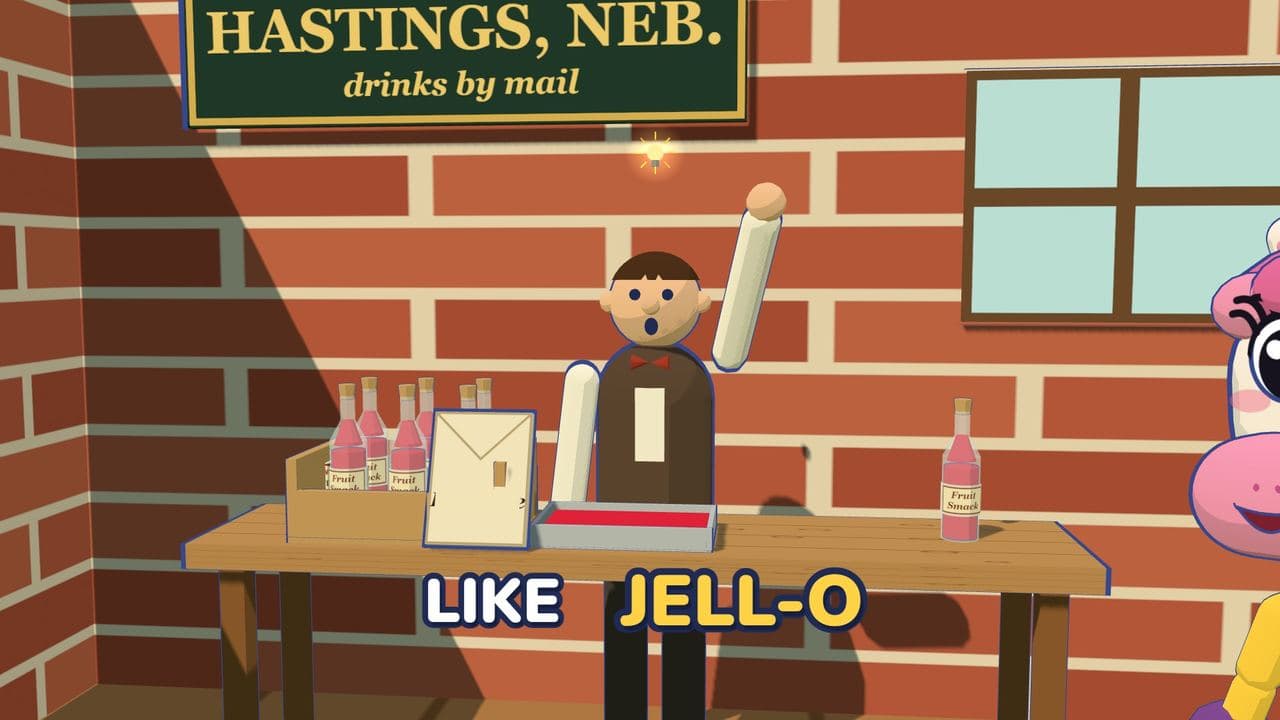
When he grew up, in Hastings, Nebraska, he sold a drink syrup called Fruit Smack, in glass bottles. The bottles were heavy, they leaked, and they broke on the way to customers.
So he thought like Jell-O. Take the water out. In nineteen twenty-seven he turned the syrup into powder, packed it in paper envelopes, and called it Kool-Ade.
A packet cost ten cents. When the Great Depression hit, he cut the price to five cents. It sold so well the company moved to Chicago in nineteen thirty-one.
Now, legend versus truth. Why did Kool-Ade, with an e, become Kool-Aid? The story goes that the government said ade was only for drinks made from fruit juice. But nobody has found that rule. Historians just aren't sure.
Fun fact. In nineteen ninety-eight, Nebraska made Kool-Aid its official state soft drink.
Try this. Hold a full bottle of water in one hand and an empty bottle in the other. That difference is the weight Edwin was paying to ship.
Brought to you by Wonderade, the juice you wish you had when you were growing up.
Questions people ask
- Who invented Kool-Aid?
- Edwin Perkins, in Hastings, Nebraska, in 1927. It began as a bottled syrup called Fruit Smack.
- Why is Kool-Aid a powder?
- Glass bottles of syrup were heavy, leaked and broke in shipping. Removing the water made the drink light and cheap to send.
- Why did Kool-Ade change its name to Kool-Aid?
- Nobody is sure. A popular story says a government rule limited "-ade" to fruit-juice drinks, but no such rule has been found.
Sources
Each source is listed with the facts we took from it.
How we checked this
What we simplified, hedged or left out, and why.
- Legend vs truth: the popular explanation for the Kool-Ade to Kool-Aid spelling change (a government objection that "-ade" means fruit juice) is told as "the story goes", and the narration says no rule has been found and historians aren't sure. That is what the sources show: theories, no primary regulatory document.
- "Fascinated by Jell-O": Nebraska Studies says he was introduced to Jell-O powder as a boy; Mental Floss and others say he admired it. The narration uses "fascinated", the common framing, and Nebraska Studies supports the childhood encounter. The year on the portal dial (1900) is the year Nebraska Studies gives for that encounter.
- The bottle problems (heavy, leaking, breaking) combine Roadside America (Hastings Museum) and Nebraska Studies ("very messy"). The farmhouse customer with broken glass is a dramatization of "broke on the way to customers".
- Prices (10 cents, then 5 cents) and the 1931 Chicago move are from Nebraska Studies.
- The original flavors are not named because sources differ on the list.
- The phrase "drink the Kool-Aid" and its origin are deliberately left out (not suitable for a kids' episode).
Brought to you by Wonderade
Wonderade is a kids' juice box. See the nutrition facts or meet the flavors.