
- Blackouts, A.I. radar, Cunningham "Cat's Eyes", newspapers told pilots ate carrots, Doctor Carrot, Dig for Victory, 100,000-ton carrot surplus by 1942, "help you see in the blackout" posters, Stolarczyk: "I have no evidence they fell for it" · Smithsonian Magazine, "A WWII Propaganda Campaign Popularized the Myth That Carrots Help You See in the Dark" (draws on the World Carrot Museum, Imperial War Museums images and the U.K. National Archives): https://www.smithsonianmag.com/arts-culture/a-wwii-propaganda-campaign-popularized-the-myth-that-carrots-help-you-see-in-the-dark-28812484/
- Cunningham's own words: "I was given the nickname 'Cat's Eyes' by the Air Ministry to cover up the fact that we were flying aircraft with radar"; Lord Woolton (Minister of Food) promoting carrots; AI (Airborne Interception) radar · Air & Space / Smithsonian, "Cat's Eyes": https://www.smithsonianmag.com/history-of-flight/cats-eyes-72622832/
- Dispute over who the story was aimed at: RAF Museum's Bryan Legate says the Air Ministry "never set out to use it to fool the Germans"; vitamin A matters for low-light vision (Emily Chew, National Eye Institute); extra carrots don't improve vision in people who already get enough · Scientific American, "Fact or Fiction?: Carrots Improve Your Vision": https://www.scientificamerican.com/article/fact-or-fiction-carrots-improve-your-vision/ · also Science Norway (RAF Museum quote): https://www.sciencenorway.no/culture-food-and-health-war/where-the-carrot-myth-comes-from/2665915
- First cultivated carrots were purple or yellow; domestication in the Afghanistan region · Soufflet-Freslon et al., PLoS One 2013, 8(8): e70801: https://pmc.ncbi.nlm.nih.gov/articles/PMC3733727
- Domesticated carrot originated in Central Asia (genetics + historical documents) · Iorizzo et al., American Journal of Botany 2013, 100(5): 930-938: https://wrap.warwick.ac.uk/id/eprint/54258
- Earliest domesticated carrots in Central Asia were purple and yellow; "orange roots appeared in Spain and Germany in the 16th century" · Ellison et al. (incl. Iorizzo, Simon), Genetics 2018, 210(4): 1497-1508: https://pmc.ncbi.nlm.nih.gov/articles/6283172/
- House of Orange story lacks evidence; Stolarczyk (World Carrot Museum): "the orange carrot came first, the Royal family dedication second"; Philipp Simon dismisses the tribute claim · DutchNews.nl, 2016: https://www.dutchnews.nl/2016/05/90146-2
Food Stories · Episode 1 · Why does...?
Do Carrots Give You Night Vision? The WWII Story Behind the Myth
The carrot night-vision myth started in WWII Britain, when radar needed a cover story. What carrots really do for eyes, and why the first carrots were purple.
 Video coming soon
The short answer
Eating carrots will not give anyone super night vision. The idea spread in Britain during World War II, when night-fighter pilot John Cunningham was nicknamed "Cat's Eyes" and newspapers were told pilots ate lots of carrots. The real secret was a new airborne radar. Carrots do supply the body with vitamin A, which the eyes need to see in dim light, so they help people who are low on it.
- Cunningham later said the "Cat's Eyes" nickname was made up to hide radar.
- Vitamin A matters for seeing in dim light; extra carrots don't improve vision in people who already get enough.
- The first farmed carrots, in Central Asia, were purple and yellow. Orange carrots appeared in Europe around the 1500s.
- Carrot historians say there is no proof the Dutch bred orange carrots to honor William of Orange.
The story (transcript)
Narration from the episode, as it is spoken.
Somebody told you to eat your carrots so you can see in the dark. Ever wonder who started that?
So do carrots really give you night vision?
Back to Britain, nineteen forty. Enemy bombers came at night, so the whole country switched off its lights.
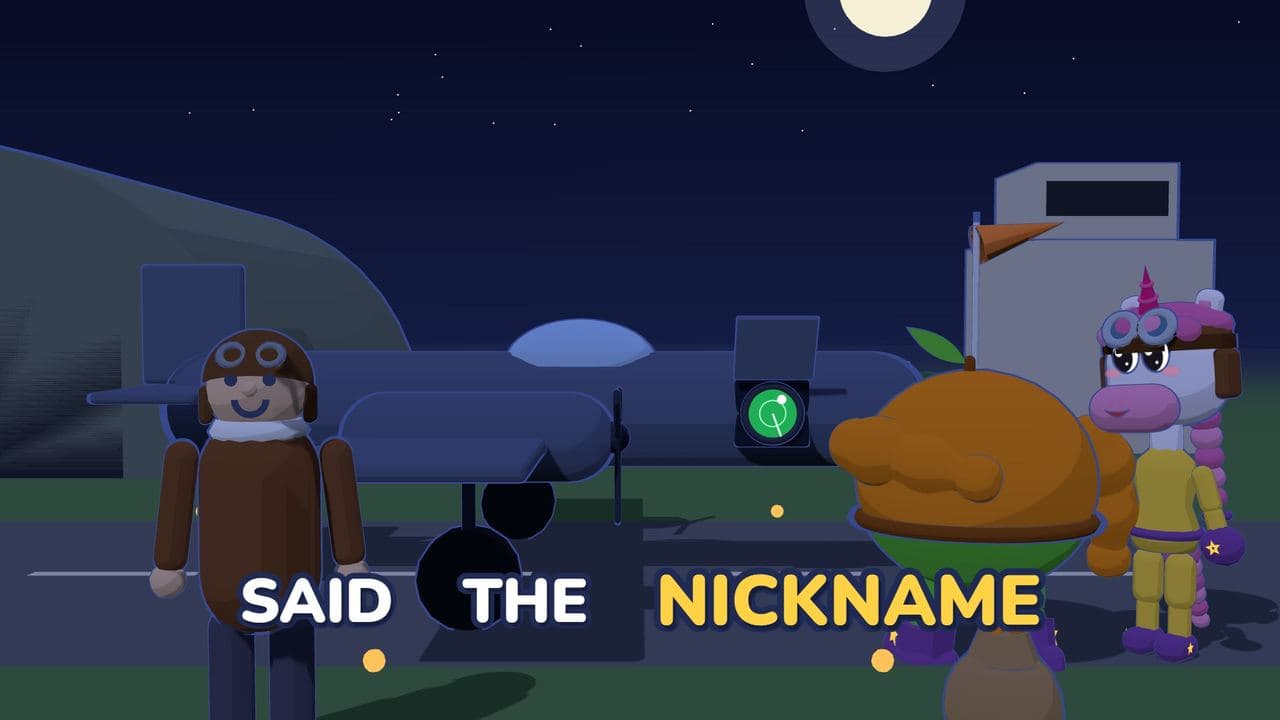
A pilot named John Cunningham kept finding bombers in the dark. They nicknamed him Cat's Eyes, and newspapers were told that pilots like him ate lots of carrots.
The real secret was radar, a new machine in his plane that found what his eyes couldn't. Cunningham later said the nickname was made up to hide it. Historians still argue about whether the enemy fell for it.
Britain also had piles of carrots, so the government made a cartoon called Doctor Carrot. Posters said carrots help you see in the blackout.
Here's the truth. Carrots have vitamin A, and your eyes need it to see in dim light. If you're low on it, carrots help. If you get enough, more carrots won't give you super night vision.
One more legend. People say Dutch farmers made carrots orange to honor their prince, William of Orange. Carrot historians say there's no proof.
The first farmed carrots, in Central Asia, were purple and yellow. Orange ones showed up in Europe around five hundred years ago. The royal fan club came later.
Try this: a rainbow carrot taste test. Purple, yellow, white, orange. Can you tell them apart with your eyes closed?
Brought to you by Wonderade, the juice you wish you had when you were growing up.
Questions people ask
- Do carrots really improve your eyesight?
- Only if you are low on vitamin A. Carrots provide beta carotene, which the body turns into vitamin A, and the eyes need vitamin A to see in dim light. People who already get enough won't see better by eating more.
- Where did the carrots and night vision myth come from?
- World War II Britain. Pilot John Cunningham's success at night was put down to carrots in the press, while the real reason was a new airborne radar. Britain also had a carrot surplus and ran posters saying carrots help you see in the blackout.
- What color were the first carrots?
- Purple and yellow. Genetic and historical studies place the first farmed carrots in Central Asia; orange carrots showed up in Europe around the 16th century.
Sources
Each source is listed with the facts we took from it.
How we checked this
What we simplified, hedged or left out, and why.
- Radar cover story. Cunningham himself said the "Cat's Eyes" nickname was meant to hide radar, and the government told newspapers the pilots ate carrots. Whether the goal was to fool Germany is disputed (the RAF Museum curator says no; others say it was mostly to sell surplus carrots to the British public). The narration says "Historians still argue about whether the enemy fell for it" and never claims the Germans were fooled. The "enemy pilot nibbling a carrot" gag ends on a "?" to keep it a question; the tales of Luftwaffe pilots eating carrots are apocryphal, so they are not narrated.
- "First" radar kill. Smithsonian says Cunningham was the first British pilot to shoot down a plane with A.I. radar; another account calls it "one of the first". The narration avoids "first".
- Vitamin A. Carrots supply beta carotene that the body turns into vitamin A; deficiency causes night blindness. The line "If you're low on it, carrots help" is a simplification of that. No claim of better-than-normal vision.
- Orange carrots. Dates vary by source (16th century in Spain/Germany per Genetics 2018; 1600s per PLoS One 2013; Dutch paintings in the early 1600s). The narration says "around five hundred years ago" in "Europe", which fits the 16th-century date, and does not credit the Dutch with inventing orange. The House of Orange link is presented as a legend with "no proof"; the royal association came later. Some Dutch sources still repeat the tribute story, so it is framed as what "people say".
Brought to you by Wonderade
Wonderade is a kids' juice box. See the nutrition facts or meet the flavors.