
- Children are born preferring sweet, which attracts them to mother's milk; a sweet solution in the mouth relaxes an infant's face and calms crying newborns; children prefer higher sweetness than adults; an age-related "bliss point"; preference declines to adult levels in middle to late adolescence, possibly related to the end of growth; heightened preference may relate to a growing child's need for calories; infants fed sugar water later preferred sweeter solutions · Mennella & Bobowski, "The sweetness and bitterness of childhood: Insights from basic research on taste preferences", Physiology & Behavior 2015;152:502-507 (Monell Chemical Senses Center): https://pmc.ncbi.nlm.nih.gov/articles/PMC4654709/
- Sensory experiences beginning early in life shape preferences · Mennella, "Ontogeny of taste preferences: basic biology and implications for health", Am J Clin Nutr 2014: https://pmc.ncbi.nlm.nih.gov/articles/PMC3927698 · and Ventura & Mennella, "Innate and learned preferences for sweet taste during childhood", 2011: https://pubmed.ncbi.nlm.nih.gov/21508837/
- 2020 study (Petty, Salame, Mennella, Pepino; Nutrients): 108 children, 172 adolescents, 205 adults aged 7-67; adults preferred about cola-level sweetness, about 8 sugar cubes in an 8-ounce glass of water; children and adolescents preferred about 50% more, about 12 cubes · University of Illinois news release: https://news.illinois.edu/sweet-taste-perception-changes-as-children-develop/
- 143 children aged 11-15; low-sugar-preference group had lower levels of a bone-growth marker; "the change in sugar preference from high to low during adolescence appears to be associated with the cessation of growth" · Coldwell, Oswald & Reed, "A marker of growth differs between adolescents with high versus low sugar preference", Physiology & Behavior 2009: https://pmc.ncbi.nlm.nih.gov/articles/PMC2764307/
- Blueberry study: 49 children and their mothers at Monell; children more sensitive to small differences in blueberry sweetness and a higher fructose bliss point; Mennella: kids' "perfect amount of sweetness in a food is higher for them than adults" · UF/IFAS news, 2017: https://blogs.ifas.ufl.edu/news/2017/06/27/achieving-bliss-children-adults-differ-perceive-sweetness-fruits/
Food Stories · Episode 5 · Why does...?
Why Do Kids Love Sweet So Much? The Science of the Sweet Tooth
Kids are born liking sweet and prefer it about 50% sweeter than adults. What the bliss point is, why it drops in the teen years, and what shapes it.
 Video coming soon
The short answer
Babies are born liking sweet tastes, which helps draw them to milk. Children also have a higher "bliss point", their favorite level of sweetness. In a 2020 study, kids and teens preferred sugar water about 50% sweeter than adults did. One idea is that growing bodies need lots of energy. Most people's preference settles to adult levels by the late teens, and early tastes can shape later likes.
- Adults in a 2020 study liked about 8 sugar cubes in a glass of water; kids and teens liked about 12.
- In one study, teens whose bones were growing less tended to like sugar less.
- Children were better than their mothers at telling which blueberries were sweeter.
- A lot of a kid's sweet tooth is biology, not a lack of willpower.
The story (transcript)
Narration from the episode, as it is spoken.
You were born with a sweet tooth, before you had a single tooth.
So why do kids love sweet so much more than grown-ups?
Put a drop of something sweet on a newborn baby's tongue, and their little face relaxes. Babies come out liking sweet. It helps draw them to milk.
Scientists even have a name for your perfect amount of sweet. It's called your bliss point. And kids have a higher bliss point than grown-ups.
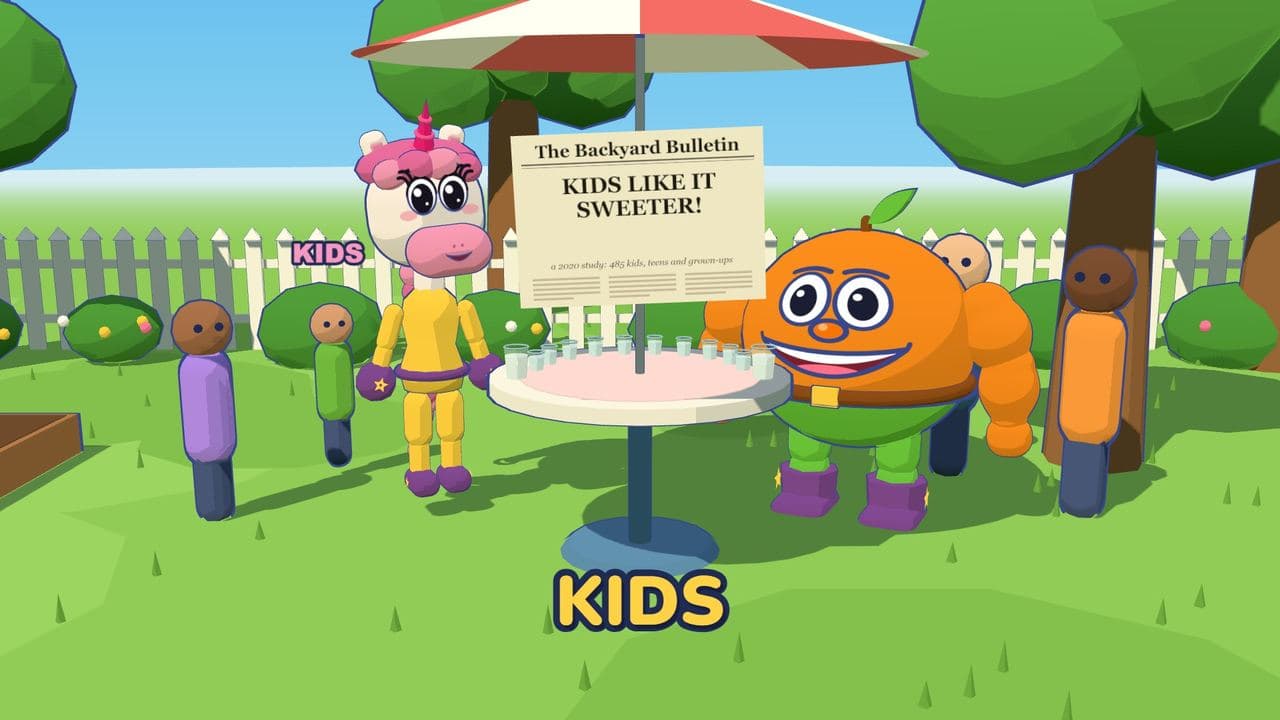
In a twenty twenty study, kids, teens, and grown-ups tasted cups of sugar water. Grown-ups liked about eight sugar cubes in a glass of water, about as sweet as a cola. Kids and teens liked it fifty percent sweeter, about twelve sugar cubes.
Why? One idea is that growing bodies need lots of energy, and sweet tastes mean energy.
Then something changes. In a study of eleven to fifteen year olds, teens whose bones were growing less tended to like sugar less. By the late teen years, most sweet tooths settle down to grown-up levels.
So a kid's sweet tooth isn't about having no willpower. A lot of it is biology. And what kids taste early on can shape what they like later.
Try this: a blueberry taste test. In one study, kids were better than their moms at telling which blueberries were sweeter.
Wonderade is made with real fruit, with three grams of sugar and zero grams added. Brought to you by Wonderade, the juice you wish you had when you were growing up.
Questions people ask
- Why do kids like sweet foods more than adults?
- Children are born preferring sweet and have a higher bliss point than adults. Researchers think this may relate to a growing body's need for energy. The preference usually declines to adult levels in the late teens.
- What is a bliss point?
- The level of sweetness a person likes best. In a 2020 study, kids' and teens' bliss point was about 50% sweeter than adults'.
- Can you change a child's taste for sweet?
- Research from the Monell Chemical Senses Center suggests early taste experiences help shape what children like later on.
Sources
Each source is listed with the facts we took from it.
How we checked this
What we simplified, hedged or left out, and why.
- "Kids and teens" fifty percent sweeter. The 2020 study grouped children and adolescents together for this result; the narration keeps both.
- Growth link is an association. Coldwell 2009 found a lower bone-growth marker in the low-preference teens; the reason is not proven. The narration says "tended to", and the energy idea is "One idea". "Late teen years" follows Mennella's "middle to late adolescence".
- "Not willpower, biology." Our framing, not a quoted myth. It says "a lot of it is biology" (not all of it), and the next sentence notes that early tastes shape later likes, so it doesn't sound like destiny.
- "It helps draw them to milk." Mennella & Bobowski say sweet preference attracts infants to mother's milk; the line says "milk" to stay inclusive of formula-fed families without adding a claim.
- Blueberries. The study compared children with their mothers ("kids were better than their moms"), so the line says moms, not "grown-ups".
- Cut on purpose. The "bliss point" term is also associated with food-industry research (Howard Moskowitz); that history wasn't verified here and isn't needed.
Brought to you by Wonderade
Wonderade is a kids' juice box. See the nutrition facts or meet the flavors.