
- Edmond, born 1829 on Bourbon (now Réunion), enslaved, discovered hand-pollination in 1841 aged 12; Bellier-Beaumont's 1861 letter; Richard's competing claim and Arditti et al. (2009) concluding Edmond worked it out himself; freed around the April 1848 abolition and given the surname Albius; died at 51 without a stipend; Vanilla planifolia native to Mexico, pollinated there by Eulaema bees. Linnean Society: https://linnean.org/news/2019/10/16/edmond-albius
- Twelve years old in 1841; enslaved on Réunion; used a small piece of bamboo to lift the rostellum and press the anther to the stigma; method still used today; not compensated. Smithsonian NMAAHC "Searchable Museum": https://www.searchablemuseum.com/edmond-albius-horticulturist/
- Charles Morren (University of Liège) published a hand-pollination method in 1837 but it was too slow to be commercial; Richard's claim debunked; thin stick or blade of grass, then thumb; slavery abolished 1848. https://en.wikipedia.org/wiki/Edmond_Albius (secondary; consistent with the Linnean piece)
- Vanilla is an orchid genus; flowers receptive to pollination for only six to seven hours; hand pollination with a
toothpick lifting the rostellum; pods ready about eight to nine months after pollination; curing (sweating, drying,
conditioning 2 to 6 months); commercial plantations rely on hand pollination because natural rates are low; Albius
- University of Florida IFAS EP656: https://ask.ifas.ufl.edu/publication/EP656
- Vanilla is the only edible orchid fruit and the world's second most expensive spice after saffron; hand pollination needed outside Mexico; curing takes months. Indian Institute of Spices Research (ICAR): https://spices.res.in/products/spices/vanilla.html
Food Stories · Episode 6 · Ingredient origin
Edmond Albius: The 12-Year-Old Who Cracked Vanilla Pollination
Why real vanilla is expensive, and how Edmond, an enslaved 12-year-old on Réunion, worked out the hand-pollination method farmers still use.
 Video coming soon
The short answer
Vanilla comes from an orchid native to Mexico, where bees pollinate it. Planted elsewhere, the vines flowered but made hardly any beans. In 1841 on the island of Réunion, Edmond, an enslaved 12-year-old, worked out a quick way to pollinate each flower by hand with a thin stick and his thumb. Farmers still use his method, one flower at a time, which is a big part of why real vanilla costs so much.
- Each vanilla flower can be pollinated for only a few hours.
- Pods grow for about eight months, then are cured for months more.
- A botanist later claimed Edmond copied him; historians who studied the letters say Edmond worked it out himself.
- Edmond became free in 1848 when France abolished slavery in its colonies. He was never paid for his discovery.
The story (transcript)
Narration from the episode, as it is spoken.
You lick vanilla ice cream. Mmm. That flavor started out as a flower.
So why is real vanilla so expensive?
Vanilla is an orchid. The vanilla bean is the pod that grows after its flower gets pollinated.
Vanilla comes from Mexico, where bees carry the pollen. When people planted it on islands far away, the vines made flowers, but hardly any beans.
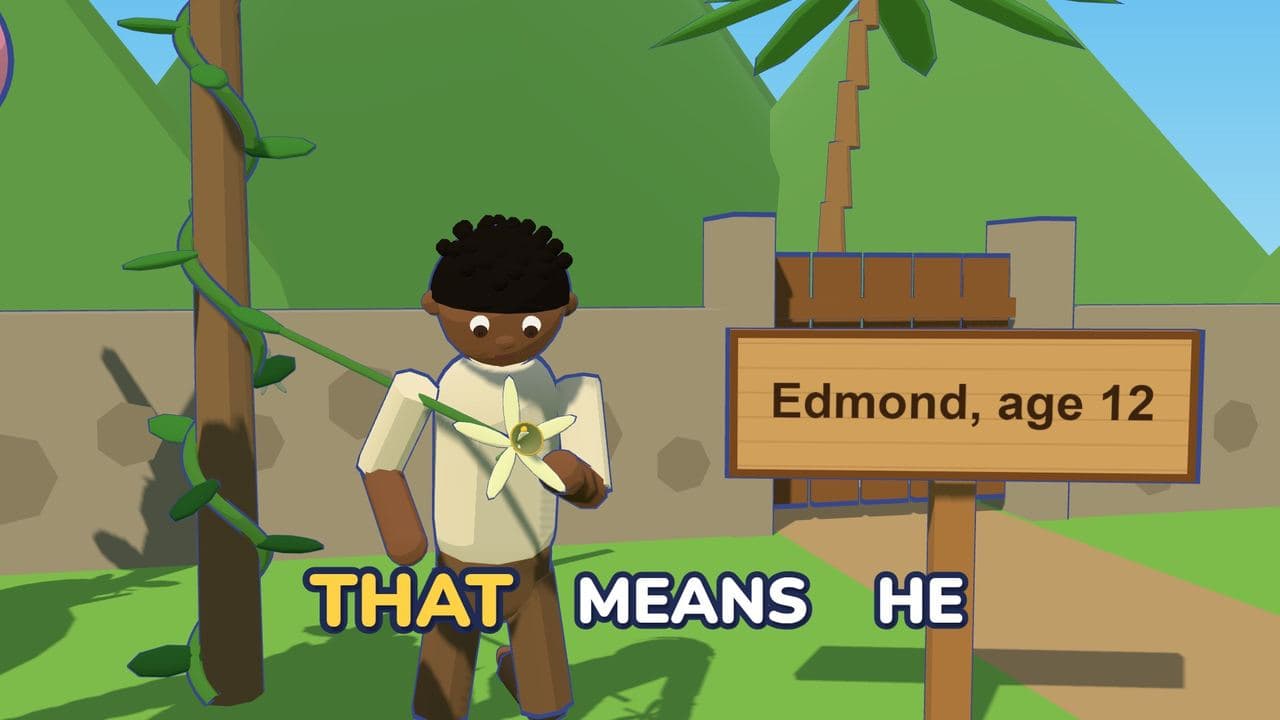
Then, in eighteen forty-one, on an island called Réunion, a twelve-year-old boy named Edmond figured it out. Edmond was enslaved. That means he was forced to work and was not free.
He used a thin little stick to lift a tiny flap inside the flower, then pressed the two parts together with his thumb. Pollen in place. Bean on the way.
Here's the tricky part. A grown-up botanist later said Edmond copied him. Historians who studied the old letters say no, Edmond worked it out himself. A Belgian professor had done it in a lab years before, but Edmond's quick, simple way is the one farmers use.
Farmers still do it by hand today, one flower at a time. Each flower is ready for only a few hours. Then the pods grow for about eight months and get cured for months more. That's why real vanilla costs so much.
Edmond became free in eighteen forty-eight, when France ended slavery in its colonies. He was never paid for his discovery.
So next time you taste vanilla, remember Edmond.
Brought to you by Wonderade, the juice you wish you had when you were growing up.
Questions people ask
- Who discovered how to hand-pollinate vanilla?
- Edmond Albius, a 12-year-old enslaved boy on Réunion, in 1841. A Belgian professor had pollinated vanilla in a lab in 1837, but Edmond's fast method is the one farmers use.
- Why is real vanilla so expensive?
- Outside Mexico every flower has to be pollinated by hand within a few hours, the pods take about eight months to grow, and curing takes months more.
- Where does vanilla come from?
- Vanilla is an orchid native to Mexico. The vanilla bean is the pod that grows after the flower is pollinated.
Sources
Each source is listed with the facts we took from it.
How we checked this
What we simplified, hedged or left out, and why.
- "First" is avoided. The Linnean piece says several people discovered hand pollination independently, and Morren did it in 1837 in Belgium. The narration credits Edmond with the quick, practical method farmers adopted, which is what all sources agree on, and names the Belgian lab work so no one can say we overclaimed.
- Tool: sources say bamboo, a thin stick, or a blade of grass, so the script says "a thin little stick".
- Pod timing simplified to "about eight months" (IFAS says eight to nine); flower window simplified to "a few hours" (IFAS six to seven; Kew is reported as about eight). Curing simplified to "months more".
- Mexico pollinators: older books say only the Melipona bee; the Linnean Society says that was shown wrong (Eulaema bees). Narration just says "bees".
- "Why expensive" is given as hand labor plus long growing and curing, which the sources support. We do not quote a price because vanilla prices swing hard year to year.
- The often-repeated statue/plaque dates were not verified, so they are left out.
Brought to you by Wonderade
Wonderade is a kids' juice box. See the nutrition facts or meet the flavors.